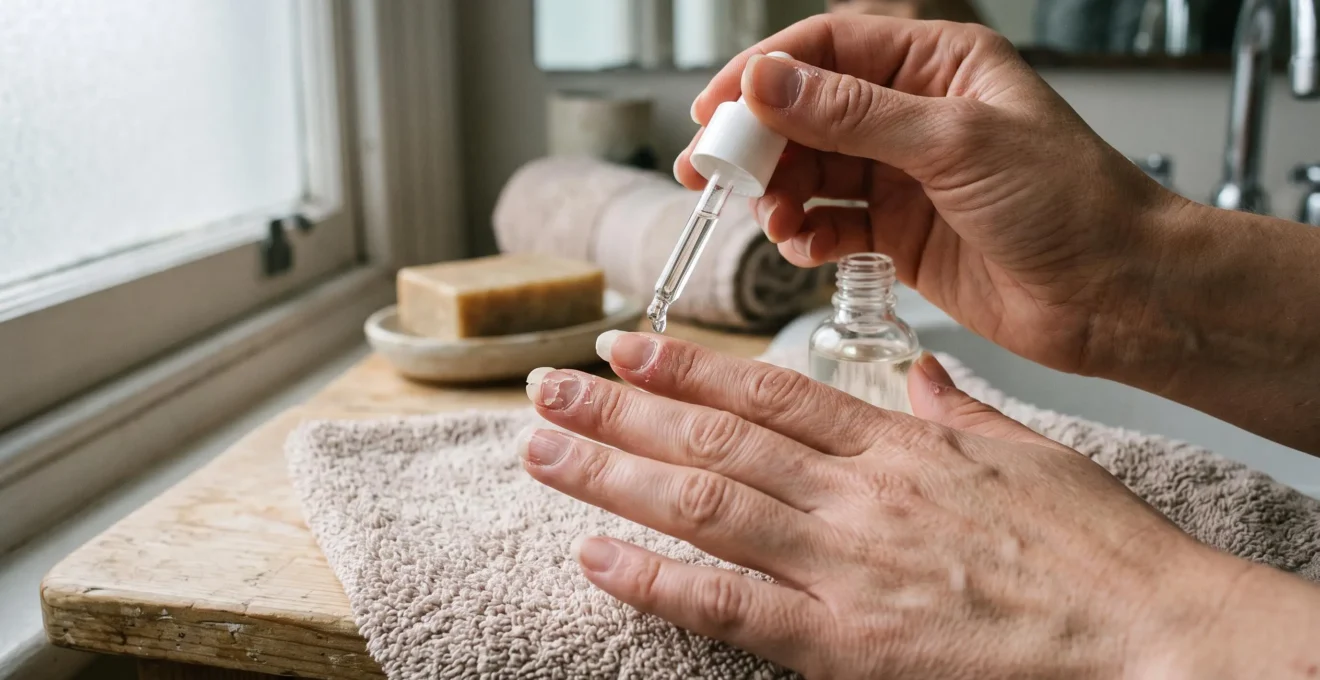
Applying cuticle oil every day should help your nails look healthier. Yet the tips may still peel into thin layers, catch on clothing or split just as they start to grow. The problem is often not how consistently you moisturise, but what happens to your nails between applications.
Cuticle oil conditions the skin around your nails, but it cannot repair nail layers that have already separated. Repeated exposure to water, unsuitable strengthening products, aggressive manicures and everyday friction can continue damaging the nail plate despite an otherwise careful routine.
Healthy nail growth begins in the nail matrix, beneath the skin near the base of each nail. Protecting this area and preventing damage to the nail as it grows out matters more than repeatedly treating the visible tips.
For anyone trying to grow longer natural nails without regular salon appointments, the most useful approach combines gentle maintenance, practical protection during household tasks and realistic expectations about growth. The aim is not to make nails harder at any cost. It is to keep them sufficiently resilient to grow without repeatedly splitting or breaking.
Why daily cuticle oil may not stop nail peeling
- Frequent wet-dry cycles can weaken the nail plate, while cuticle oil cannot reconnect layers that have already separated.
- Short, smoothly filed nails, protective gloves and careful product removal can reduce avoidable damage.
- Healthy growth depends on protecting the nail matrix and surrounding skin consistently, not adding more products or complicated treatments.
- Why Can Frequent Handwashing Make Nails Peel More Within 2 Weeks?
- How to Build a 5-Minute Weekly Nail Routine That Reduces Breaks Without Salon Visits?
- Nail Hardener or Strengthening Base Coat: Which Helps Brittle Nails Without Damage?
- The Cuticle-Cutting Mistake That Can Lead to Painful Hangnails
- When Should You Oil Cuticles if You Use Polish So It Doesn’t Lift in 24 Hours?
- How to Build a 7-Minute Morning Routine on Workdays Without Skipping the Basics?
- How to Build a 5-Minute Weekly Nail Routine That Reduces Breaks Without Salon Visits?
- Why Does “Self-Care” Start Feeling Like Another Full-Time Job After 30?
Why Can Frequent Handwashing Make Nails Peel More Within 2 Weeks?
Frequent handwashing can make nails peel because repeated exposure to water causes the nail plate to absorb moisture and then dry out again. These changes place stress on its layered structure. Peeling may become noticeable over repeated days or weeks of exposure, although there is no established two-week threshold. Cuticle oil alone cannot prevent this damage.
The nail plate consists mainly of tightly packed keratinised cells. When exposed to water, it absorbs moisture and expands. As it dries, it contracts again. Repeated wet-dry cycles can contribute to weakening and separation between its layers, particularly at the free edge, where the nail experiences the most friction.
The American Academy of Dermatology‘s healthy nail care recommendations explain that excessive water exposure can weaken nails and contribute to peeling, splitting and breakage.
Three overlapping factors deserve attention:
- Water exposure: Repeated soaking and drying can aggravate existing weakness. Avoid unnecessary soaking and wear suitable gloves for prolonged wet household tasks.
- Cleaning agents: Some soaps and detergents remove oils from the surrounding skin or cause irritation. Choose a mild hand cleanser when possible.
- Water temperature: Very hot water can worsen skin dryness and discomfort. Lukewarm water is a practical choice for routine washing.
These factors are not interchangeable. Switching to a gentler soap may help irritated skin, but it does not eliminate the effects of prolonged water exposure.
To investigate whether everyday wet work contributes to your peeling, look at where the damage occurs. Peeling mainly at the tips, particularly on frequently used fingers, alongside repeated washing or cleaning, is compatible with external wear.
By contrast, changes affecting much of the nail, several nails without an obvious exposure pattern, or accompanied by pain, swelling, unusual colour changes or other symptoms deserve professional assessment. Appearance alone cannot reliably distinguish external damage from a medical cause.
Apply moisturiser after washing, including around the nails. Cuticle oil may help condition surrounding skin, but it should supplement protection rather than replace it.
The practical goal is not to stop necessary handwashing. It is to minimise avoidable wet exposure, protect your hands during longer cleaning tasks and maintain the nail edges before small splits become larger breaks.
How to Build a 5-Minute Weekly Nail Routine That Reduces Breaks Without Salon Visits?
A five-minute weekly nail routine should focus on preventing snags, maintaining comfortable nail length and conditioning the surrounding skin. Gently file rough edges, check the cuticle area without cutting it, apply a little oil and consider a protective coating. The routine supports existing nails; it cannot instantly reverse damage already present.
Short sessions are particularly useful when peeling makes nails difficult to grow. Rather than waiting until a corner catches on fabric, weekly maintenance helps keep the free edge smooth and less vulnerable to mechanical damage.
A practical sequence is:
- Minute 1 — Inspect: Look for lifting layers, snagging corners, skin irritation or changes that were not present previously.
- Minutes 2–3 — Shape: File gently with a fine-grit nail file, using controlled strokes in one direction rather than forceful sawing.
- Minute 4 — Condition: Apply a small amount of cuticle oil or moisturiser to the skin around each nail. There is no need to soak already brittle nails.
- Minute 5 — Protect: If you use a suitable base coat, apply it to a clean, dry, oil-free nail plate. Otherwise, finish with moisturiser around the nails.
The sequence matters when polish is involved: conditioning products should not be left on the nail plate immediately before applying a coating, because residue may interfere with adhesion.
Adjust the routine to how your nails behave. If they peel in thin layers, keep the free edge short and avoid unnecessary soaking, scraping or buffing. If they bend easily without splitting, prioritise an even shape and avoid products that make them excessively rigid.
Do not treat cuticle pushing as an essential weekly step. If you choose to move excess cuticle tissue, do so very gently after it has softened naturally, without disturbing the protective skin seal.
Remember that weekly maintenance and daily protection have different jobs. Filing addresses snags and uneven growth; gloves and moisturising reduce repeated exposure between sessions.
Because fingernails grow gradually, the difference between old damaged nail and better-protected new growth becomes clearer over time. Product choice is the next consideration, particularly when nails remain brittle despite careful handling.
Nail Hardener or Strengthening Base Coat: Which Helps Brittle Nails Without Damage?
A nail hardener increases nail rigidity, while a strengthening base coat generally creates a protective film over the nail plate. Neither is automatically better for peeling nails. If your nails already snap easily, excessive stiffness may make the problem worse. The safer choice depends on nail flexibility, product ingredients and how gently the coating is removed.
Traditional hardeners may contain formaldehyde or related compounds. These ingredients interact with nail keratin to increase hardness, but harder does not necessarily mean more resistant to breakage.
The FDA‘s information on nail care product ingredients explains that frequent use of formaldehyde-containing hardeners can make nails brittle and more likely to peel or break. Such products may also cause irritation or allergic reactions.
Some strengthening base coats use film-forming resins, polymers or reinforcing ingredients to provide a surface coating. Their performance depends on the actual formulation; the word “strengthening” on a label is not evidence that the product repairs the nail’s internal structure.
Use the way your nails break as a starting point for deciding what to try.
| Nail behaviour | Potentially useful approach | What to avoid |
|---|---|---|
| Nails peel into thin layers | Keep nails short, smooth the tips and consider a gentle protective base coat. | Peeling off polish, aggressive buffing or scraping separated layers. |
| Nails bend before breaking | Consider a flexible protective coating if polish is tolerated. | Assuming a stronger hardener is always beneficial. |
| Nails snap with little bending | Reduce mechanical stress and reassess stiffening products. | Repeatedly applying hardener when brittleness increases. |
| Skin becomes itchy, red or uncomfortable | Stop the suspected product and seek advice if symptoms persist. | Continuing an irritating treatment to achieve harder nails. |
For brittle nails, flexibility and protection can be more useful goals than maximum hardness. A coating may help shield the surface from incidental friction, but it cannot permanently bond already separated layers together.
Follow the manufacturer’s directions, including any advised limits on use. There is no universal schedule for rotating hardeners or taking product breaks that suits every formula.
Removal also matters. Scraping away polish, forcibly peeling off gel or repeatedly buffing the nail plate can undermine the benefit of a protective coating. Use the appropriate remover and avoid prolonged or unnecessarily aggressive exposure.
Before adding another strengthening product, check whether your manicure habits are damaging the skin at the nail base. Preserving that protective area is important for comfortable, healthy growth.
The Cuticle-Cutting Mistake That Can Lead to Painful Hangnails
Cutting or aggressively pushing back the cuticle can damage the protective seal between the nail plate and surrounding skin. This may cause irritation, small tears and an increased risk of infection. Hangnails develop when skin beside the nail splits or tears, and cutting living tissue can aggravate that process rather than prevent it.
The cuticle is part of the natural barrier protecting the nail fold and the underlying nail matrix area. Removing it to create a neat-looking manicure can leave vulnerable skin exposed.
The AAD’s manicure and pedicure safety advice recommends against cutting cuticles or forcefully pushing them back because this can increase infection risk.
If you want to tidy the area, first soften it naturally after a shower or bath. When necessary, gently ease back excess tissue without applying pressure or attempting to separate firmly attached skin from the nail.
A useful visual distinction is whether the tissue is attached to healthy, sensitive skin. Do not cut attached tissue, even when it looks dry or untidy. Routine trimming is unnecessary, and trying to remove tissue close to the nail fold can cause injury.
For a hangnail, never pull, bite or tear the loose skin. Soften the area, then carefully clip only the clearly detached piece with clean, sharp nail clippers. Avoid cutting into healthy skin. If the area is painful or you cannot identify what is safely detached, leave it alone and seek professional advice.
Moisturising the surrounding skin can help manage dryness and reduce the temptation to pick at rough edges.
Watch for persistent redness, swelling, warmth, pus or throbbing pain around the nail fold. These symptoms can indicate paronychia, an infection that may require medical treatment. Seek prompt assessment, particularly if symptoms are spreading or worsening.
Once the skin around your nails is comfortable and intact, the next challenge is coordinating moisturising with nail polish so that one habit does not interfere with the other.
When Should You Oil Cuticles if You Use Polish So It Doesn’t Lift in 24 Hours?
Apply nail polish to a clean, dry nail plate without residual cuticle oil or hand cream. Use cuticle oil around the surrounding skin after your polish has set sufficiently, taking care not to disturb the finish. For gel systems, follow the manufacturer’s preparation and curing instructions, then apply oil after curing is complete.
Cuticle oil and polish serve different purposes. Oil conditions skin around the nail; polish needs to adhere to the nail plate. Leaving a greasy film on the surface immediately before application may interfere with that adhesion.
A dermatology review of nail cosmetics and polish adhesion explains the importance of nail-surface condition and the role of base coats and primers in coating performance.
For regular nail polish, follow this sequence:
- Wash your hands if needed, then dry your nails thoroughly.
- Remove residual oil, lotion or old coating from the nail plate using a preparation method appropriate to your polish.
- Apply the recommended base coat and polish in thin layers.
- Allow the coating to set according to its instructions.
- Apply a small amount of cuticle oil to the surrounding skin without rubbing or pressing against an incompletely dried coating.
There is no established universal waiting period between applying oil and painting nails. What matters is the absence of residue when the coating is applied.
Similarly, applying oil immediately after polishing has not been shown to prevent lifting within 24 hours. It is a skin-conditioning step, not a guaranteed polish-adhesion treatment.
If your polish lifts or chips during the first day, check whether the nail was completely dry, whether oil or lotion remained on the surface, and whether the base coat was compatible with your polish.
Also consider physical causes, such as repeated water exposure, contact with cleaning products or using your nails to open packaging. Early lifting is not necessarily caused by natural nail oils alone.
Gel systems require particular care because adhesion and curing depend on correct product preparation. Avoid applying oil before gel preparation unless the product’s instructions specifically allow it. Do not compensate for lifting by aggressively buffing the natural nail.
Once you know when to use oil, the remaining challenge is consistency. A small morning habit is usually easier to maintain than a lengthy routine that competes with work and household responsibilities.
How to Build a 7-Minute Morning Routine on Workdays Without Skipping the Basics?
A seven-minute morning routine does not need seven minutes of dedicated nail care. Attach a few quick protective actions to things you already do: apply hand cream after washing, massage a little cuticle oil into the surrounding skin and make protective gloves easy to find. Leave filing and product maintenance for another day.
The easiest routine is one that does not require remembering several separate appointments with yourself. If you already wash your face, make breakfast and get ready for work, nail care can fit naturally between those activities.
Consider this practical morning sequence:
- During your usual handwashing: Use comfortable water temperature and dry your hands thoroughly.
- After drying: Massage hand cream into your hands and around your nails.
- Before leaving or beginning work: Apply a small amount of cuticle oil to the surrounding skin if you find it helpful and comfortable.
- Before household cleaning: Keep protective gloves somewhere accessible so using them requires little effort.
These actions should fit within your existing morning routine rather than adding a separate seven-minute treatment.
Greasy fingertips are a common practical barrier. Start with a very small amount of oil, massage it into the skin and wipe away any excess before using a keyboard, handling your phone or preparing food. Wash your hands when food hygiene requires it.
Daily conditioning is not the same as treating an established split. Oil cannot restore a layer that has lifted from the nail plate, and applying more does not necessarily produce a better result.
However, keeping the surrounding skin comfortable and avoiding damage around the nail fold helps maintain a healthier environment for nail growth. Combined with protection from repeated wet work, this gives newly growing nails a better chance of remaining intact as they extend beyond the fingertip.
Morning care handles everyday conditioning, but growing nails still need occasional attention to shape and length. That is where a short weekly maintenance session becomes useful.
How to Build a 5-Minute Weekly Nail Routine That Reduces Breaks Without Salon Visits?
To make a five-minute weekly routine effective over time, use each session to assess what has changed rather than repeating unnecessary treatments. Check the free edges, smooth new snags, inspect the surrounding skin and adjust protection where needed. This approach helps maintain growing nails without over-filing, repeated soaking or excessive product use.
After establishing a basic routine, consistency matters more than adding new steps. A weekly check gives you an opportunity to notice recurring patterns: perhaps one fingernail always splits after cleaning, or the nails on your dominant hand break more frequently.
These observations can guide practical changes. For example, if one nail repeatedly catches on clothing, shortening its free edge slightly may be more useful than applying another layer of hardener.
The aim is to keep growth manageable while minimising unnecessary contact with the nail plate.
Your five-action weekly nail protection checklist
- Inspect all ten fingernails: Identify and note any new peeling, cracks, colour changes or painful areas.
- Check nail length: Confirm that each free edge is short enough for comfortable daily activities and not repeatedly catching on objects.
- Smooth rough edges: Gently file visible snags and finish with an even, comfortable shape.
- Check the surrounding skin: Confirm that the nail folds are comfortable and avoid cutting or forcibly pushing attached cuticles.
- Review your protection: Identify one recurring wet-work or product exposure and decide whether gloves, gentler handling or a product pause is appropriate.
Adapt your priorities to nail behaviour. If layers peel away at the tips, focus on keeping nails short and reducing friction. If nails bend easily but remain intact, maintaining an even shape may be sufficient. If a nail becomes noticeably rigid or starts snapping after a strengthening product, reconsider that product.
Do not repeatedly soak your nails to prepare for maintenance. For nails already affected by moisture-related peeling, unnecessary soaking adds another exposure without a clear benefit.
Likewise, avoid filing away the entire damaged surface. Removing more nail material can leave the nail plate thinner and potentially more vulnerable.
Visible improvement is gradual because a weekly routine primarily protects the nail that has already grown. The nail plate does not regenerate from its tip; new nail material is produced at the matrix and moves outwards as growth continues.
Look for fewer fresh snags and less ongoing breakage over successive checks rather than expecting existing peeling layers to disappear after a single session.
Once these small actions become familiar, there is little reason to expand them into an elaborate beauty ritual. Sustainable nail care should fit into ordinary life, not dominate it.
What matters most for stronger natural nails
- Protect before treating: Reduce prolonged wet exposure and mechanical stress before buying additional strengthening products.
- Preserve the nail fold: Healthy growth depends on protecting the area around the nail matrix, not repeatedly cutting or manipulating it.
- Keep maintenance proportionate: Regular small adjustments support growing nails without turning nail care into a demanding schedule.
Why Does “Self-Care” Start Feeling Like Another Full-Time Job After 30?
Self-care can begin to feel like another job when everyday maintenance becomes a growing list of products, appointments and routines. For nail care, this complexity is rarely necessary. A small number of consistent protective habits can address common contributors to peeling and breakage without requiring a daily manicure or elaborate treatment schedule.
There is no established age threshold at which nail care suddenly becomes overwhelming. The question is less about turning 30 and more about balancing personal care with work, family responsibilities and limited time.
Nail-care marketing can make ordinary maintenance appear complicated. Oils, serums, strengthening treatments, specialised tools and multiple coatings may each promise a different benefit, creating the impression that every step is essential.
Yet the fundamental priorities are straightforward:
- Protect nails from prolonged water exposure and unnecessary friction.
- Keep the free edges smooth and at a manageable length.
- Moisturise dry surrounding skin without cutting or damaging the cuticle barrier.
- Choose nail products carefully and remove them without scraping or peeling.
- Seek professional advice when changes are persistent, unexplained or accompanied by concerning symptoms.
More products do not automatically mean healthier nails. Sometimes simplifying your routine reduces the number of opportunities for accidental damage.
If you have little time or energy, prioritise actions according to the harm they help prevent. Wearing gloves for prolonged cleaning can matter more than remembering another oil application. Avoiding painful cuticle trimming is more important than achieving a perfectly groomed appearance.
Skipping an occasional oil application does not undo every previous effort. What matters is the broader pattern of exposure, protection and gentle handling over time.
It is also important to distinguish cosmetic maintenance from medical care. Persistent peeling, substantial changes in nail appearance, pain or swelling should not be managed indefinitely by switching products.
When nails repeatedly split despite sensible protective measures, assessment by a GP or dermatologist may help identify causes that a home routine cannot address.
For the next week, choose one manageable change: use gloves for wet household tasks, keep your nail tips smooth or stop cutting your cuticles. Maintain it alongside your normal moisturising habits and observe whether fresh damage becomes less frequent. Building stronger-looking natural nails starts with preventing avoidable damage while new nail grows, not trying to repair every old split with oil.
Can peeling nail layers grow back together naturally?
No. Once layers of the nail plate have separated, cuticle oil and strengthening products cannot biologically reconnect them. Gentle filing can manage snagging edges, while protection helps prevent additional damage as the affected section gradually grows out.
Does using cuticle oil twice a day work better than once?
There is no established universal application frequency that guarantees less peeling. Applying oil when the surrounding skin feels dry may improve comfort, but frequency matters less than reducing repeated water exposure, friction and damaging nail-care practices.
Should you stop wearing nail polish while your nails are peeling?
Not necessarily. A suitable coating may provide some surface protection, but frequent removal, aggressive buffing and peeling off polish can worsen existing damage. If a product causes irritation, excessive stiffness or increasing breakage, discontinue it and reassess your routine. Persistent problems warrant professional advice.
Can diet or vitamin deficiencies cause nails to peel?
Nail changes can sometimes accompany nutritional or medical conditions, although peeling alone does not establish a deficiency. The sources used here do not identify a specific nutrient deficiency as the cause of peeling. Avoid assuming supplements are necessary without an appropriate assessment, particularly if several nails are affected or other symptoms are present.
When should you see a GP or dermatologist about peeling nails?
Seek professional advice if peeling persists despite reducing external damage, affects multiple nails without an obvious explanation, or occurs with significant changes in colour, shape or thickness. Redness, swelling, pus or throbbing pain around a nail may indicate infection and should be assessed promptly, especially if symptoms worsen.