Nail care and manicure
Your hands are one of the first things people notice about you, and healthy, well-groomed nails play a bigger role in that first impression than most of us realize. Yet nail care is often reduced to a quick file and a coat of polish, when in reality it involves a small daily routine, a few good habits and an understanding of what your nails actually need. This pillar page brings together everything a beginner or intermediate enthusiast should know about nail care and manicure: how nails work, how to keep them strong, how to do a manicure at home, which salon options exist and how to avoid the most common mistakes.
Understanding How Your Nails Work
Before diving into routines and products, it helps to know what you are actually caring for. A nail is made of a protein called keratin, the same material found in hair. The visible part of the nail is technically dead tissue, which is why trimming it does not hurt. The living part is hidden underneath and around it: the nail matrix, located under the cuticle area, is where new nail cells are produced. This is why damaging the cuticle or the base of the nail can affect the way the whole nail grows for months.
Fingernails grow on average about three millimeters per month, meaning a fully renewed nail takes roughly four to six months to replace itself. That timeline matters: if you weaken a nail today, the damage stays visible until that section grows out. Patience, therefore, is a core principle of nail care.
Building a Simple Daily Nail Care Routine
Healthy nails do not require an expensive routine. What they do require is consistency and gentleness. Think of your nails like delicate fabric: frequent harsh treatment wears them out, while regular gentle maintenance keeps them in good condition for years.
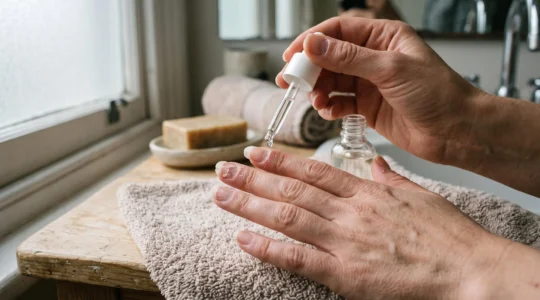
- Keep hands moisturized. Apply hand cream after washing and a dab of cuticle oil or balm once a day. Dryness is the leading cause of peeling and brittle nails.
- Wear gloves for chores. Water, dish soap and cleaning products strip natural oils from the nail plate. Rubber-lined gloves are one of the cheapest and most effective nail care tools.
- File instead of sawing. Use a fine-grit file (180 grit or higher) and stroke in one direction to prevent splitting.
- Keep nails at a working length. Nails that extend far past the fingertip catch and bend more easily, leading to breaks.
- Never bite or pick. Biting damages the nail bed and transfers bacteria; picking off polish rips layers off the nail plate.
A helpful habit is a short weekly check: look at each nail for discoloration, ridges, spots or changes in shape. Most changes are harmless, but persistent discoloration, thickening or separation of the nail from the bed deserves a visit to a dermatologist, as it can signal a fungal infection or another underlying condition.
How to Trim and Shape Nails Correctly
Trimming seems obvious, but doing it wrong is a frequent source of hangnails, ingrown edges and splits. Follow this simple process:
- Soak or trim nails after a shower, when they are slightly softer but not soaked, which reduces cracking.
- Cut with sharp clippers or nail scissors in a few small clips rather than one deep cut.
- Aim for a straight-ish edge with gently rounded corners; cutting deep curves into the sides encourages ingrown nails.
- File lightly to smooth the edge and refine your shape: square, squoval, round or almond.
- Finish with a drop of oil massaged into each cuticle.
Shape choice is mostly aesthetic, but shorter, softer shapes such as round and squoval are more resistant to breaking. Almond and stiletto shapes look elegant but leave the sides of the nail more exposed, so they suit stronger nails or those wearing protective enhancements.
Doing a Basic Manicure at Home
A proper manicure is simply a structured version of your regular care, plus polish if you like. It takes about thirty minutes and needs surprisingly little equipment.
- Nail clippers and a fine file
- A cuticle pusher (never a metal cutter for beginners)
- Cuticle oil or remover
- A base coat, nail polish and a top coat
- Acetone-free nail polish remover and cotton pads
Here is the order of operations for a clean, long-lasting result:
- Remove old polish completely and wash your hands to eliminate oils.
- File nails to your chosen shape while dry.
- Apply a little cuticle remover, wait a minute, then gently push back the cuticles with the pusher. Do not force or cut them; the cuticle is a protective seal against infection.
- Wipe nails again with remover to degrease the plate.
- Apply a thin base coat — it prevents staining and helps polish adhere.
- Apply two thin layers of color, letting each dry a few minutes. Thin layers dry faster and chip less than thick ones.
- Seal with a top coat, capping the free edge of each nail to reduce chipping.
- Wait at least fifteen minutes, then add a drop of oil around the edges to condition the skin.
Imagine two friends painting the same color: one skips the base coat and applies one thick layer; the other follows the steps above. The second manicure typically lasts a week or more, while the first chips within days. Technique, more than price, is what separates the two results.
Long-Lasting Options: Gel, Shellac and Acrylics
For those who want manicures to last two weeks or longer, several salon technologies exist, each with different trade-offs.
- Regular polish: inexpensive and gentle on the nail, but usually lasts two to five days.
- Soft gel (often called shellac-style): cured under a lamp, lasts two to three weeks, soaks off with acetone with minimal damage.
- Hard gel: stronger, ideal for growing out natural nails, must be filed off professionally.
- Acrylic extensions: sculpt length and strength with a powder-liquid system; require fills every two to three weeks as the natural nail grows.
- Press-on nails: a short-term, low-commitment option that has improved dramatically in quality and causes little damage when applied and removed correctly.
The main caution with all cured systems is proper removal. Peeling or biting off gel takes the top layers of the natural nail with it, leaving thin, sensitive plates for months. Soaking off with acetone, ideally at a salon or with patience at home, is always the safer route. Another point worth knowing: cured products require ultraviolet lamps. Applying a broad-spectrum sunscreen to your hands before the appointment, or using fingerless protective gloves, is a sensible habit for anyone who gets gel manicures regularly.
Strengthening Weak and Brittle Nails
If your nails constantly peel or break, the cause is usually external — water exposure, harsh removers or mechanical stress — rather than a lack of vitamins. Before buying supplements, address these factors first. A few approaches genuinely help:
- Use a nail hardener or keratin treatment for a few weeks as a protective layer while the nail grows out.
- Take a break from gels and acrylics for a month or two between sets, a practice often called a nail rest period.
- Moisturize consistently; flexing between dry and wet states is what makes nails brittle.
- Keep polish on — a layer of base coat actually shields the nail plate from water absorption.
One practical analogy: a nail behaves like a sponge. Repeatedly soaking and drying it causes expansion and contraction that creates micro-cracks, visible as peeling layers. Reducing the soaking-drying cycle — with gloves and occlusive moisturizers — stops most peeling at its source.
Common Mistakes to Avoid
Even enthusiastic self-care can backfire when habits are based on myths. These are the errors professionals see most often:
- Cutting the cuticles aggressively, which opens the door to infection and can create ridges in the new nail.
- Using nails as tools to open cans, scrape stickers or pry things apart.
- Filing back and forth with a coarse file, which frays the nail edge.
- Skipping the base coat with dark colors, leading to yellow staining.
- Believing that white spots mean calcium deficiency — they are almost always minor trauma to the nail matrix.
When to See a Professional
A good salon is not only about aesthetics. Hygiene matters enormously: instruments should be sterilized or single-use, and technicians should never work on nails with visible infections. If you notice persistent pain, swelling, greenish discoloration, or a nail lifting from the bed, pause cosmetic treatments and consult a doctor or dermatologist first. A reputable nail technician will make the same recommendation.
Choosing between a salon and a home routine depends on your goals, budget and time. Home manicures cost little, involve no scheduling and let you control every product. Salons offer precision, durability and relaxation. Many people combine both: simple care at home daily, and a professional treatment once or twice a month or for special occasions.
Key Takeaways for Healthy, Beautiful Nails
Nail care rewards patience over quick fixes. Moisturize daily, protect your hands from water and chemicals, trim and file gently, and treat the cuticle as a friend rather than an enemy. Whether you prefer bare nails, classic polish or long-lasting gel, the foundation is the same: a healthy nail plate gives any style a better canvas. Start with small, consistent habits, give your nails a few months to respond — remember their slow growth cycle — and the results will show in everything you do with your hands.
Why Do Your Nails Keep Peeling Even if You Use Cuticle Oil Daily ?
Applying cuticle oil every day should help your nails look healthier. Yet the tips may still peel into thin layers, catch on clothing or split just as they start to grow. The problem is often not how consistently you moisturise,…
Lire la suite